
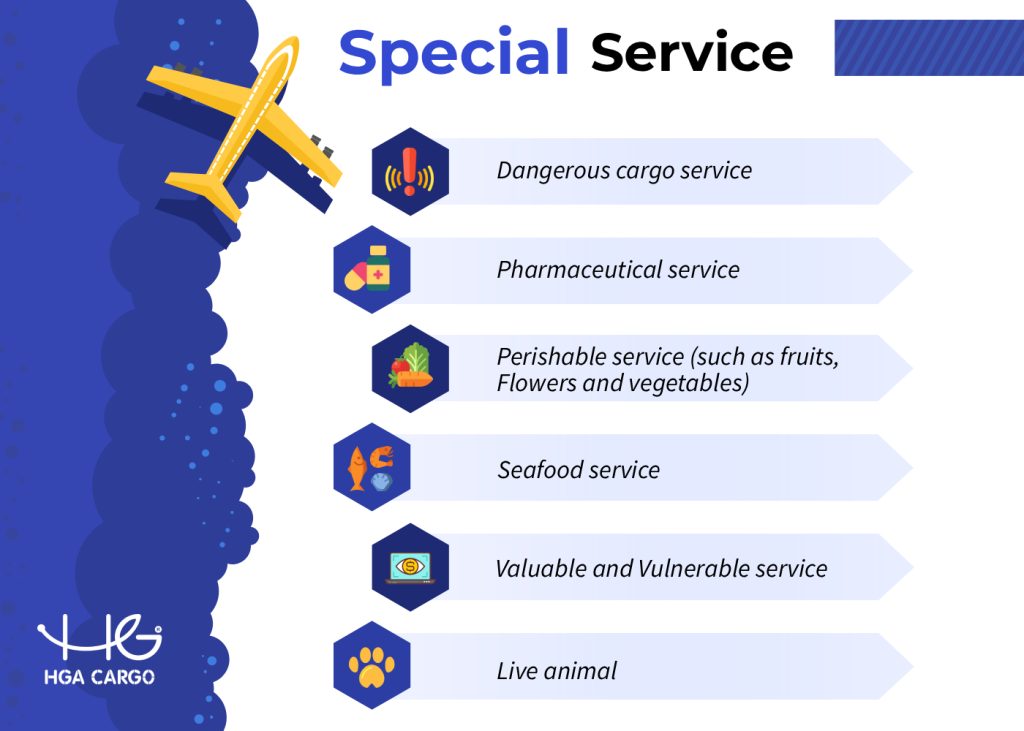
Goods are considered “special cargo” when they possess unique characteristics that require specific handling procedures throughout the entire transportation process.
According to IATA (International Air Transport Association), special cargo transported by air is classified into nine main categories as follows:
-
Live Animals (AVI): This category includes subtypes such as AVB (live birds), AVF (live fish), and AVX (live chickens). Live animals must be accepted, packaged, and transported under special conditions in accordance with IATA Live Animals Regulations (LAR).
-
Valuable Cargo (VAL): Cargo with a declared value of USD 50 or more per kilogram is considered valuable. These shipments require special storage, enhanced security, and constant supervision by airport security services. Typical examples include mobile phones, computers, gold, and jewelry.
-
Diplomatic Mail (DIP): Cargo related to diplomatic and governmental purposes, such as shipments for embassies, consulates, ministers, or government officials. Diplomatic shipments are stored in secured, dedicated facilities.
-
Perishable Cargo (PER): Items that require temperature control and expedited handling, such as meat, fish, fruits, vegetables, and other food products. These shipments must be delivered promptly to maintain product quality.
-
Human Remains (HUM): This is a highly sensitive category that includes human remains and cremated ashes. Cremated remains must be properly sealed, packaged, and handled according to the specific requirements of the destination country.
-
Dangerous Goods (DG): This category covers substances that can pose risks to health, safety, or property. Staff must complete specialized IATA Dangerous Goods Regulations (DGR) training to identify and handle these items correctly. Dangerous goods are divided into nine classes: Explosives, Gases, Flammable Liquids, Flammable Solids, Oxidizing Substances, Toxic Substances, Radioactive Materials, Corrosives, and Miscellaneous Dangerous Goods.
-
Wet Cargo (WET): Shipments that contain or may release liquid during transport, such as seafood, meat, or any goods packed with ice or liquid elements.
-
Strongly Scented Cargo (SMELL): Goods that emit strong odors and therefore require airtight packaging and separate storage areas to prevent contamination of other shipments. Examples include garlic, oils, cheese, and similar products.
-
Oversized or Heavy Cargo (BIG/HEA): Bulky or heavy items that require special handling equipment and loading procedures tailored to their size and weight.
These are the main IATA special cargo classifications for air transportation.
For more detailed information or consultation regarding air cargo handling and logistics, please contact our cargo specialists for professional support.

